Automating Images and Video Analysis with AI
My role:
Automation Engineer
Workflow Automation
Data Architecture
Data Analysis
Product Architecture
Client Service
API Integration
Digital Consulting
Tools Integration
No Code Development
The Task: Automate the visual reading of ad creatives with an LLM, to improve research quality and reduce time spent on it.
Context: The client is a PR agency. Researching ad creatives is normally done by hand — an analyst goes through the ads and creatives, picks what stands out, and forms hypotheses about why certain ads worked. Those hypotheses are limited by personal bias and by how many creatives one person can meaningfully review before fatigue.
The Process:
Discovery and architecture. There was no formal discovery stage on this one — the client already had a public n8n template that I used.
UI for the analyst all in Google Sheets: button that triggers a run, results in a separate tab of the same spreadsheet. Inside the workflow an LLM handles the visual reading. The analyst controls when each cycle starts, and works with the output in the same tool they already use.
The visual reading itself relies on prompts designed to produce consistent, comparable descriptions — so the output of one cycle can be compared against another without manual cleanup.
Development. The stack is n8n with a Gemini API integration for image-to-text vision, connected to Google Sheets via Apps Script.
Challenge: Partway through, the Apify actor we were using in the workflow stopped working. I rebuilt the affected nodes around a different tool with a different data model, and worked through connection and proxy issues before the pipeline ran cleanly end-to-end.
How it works:
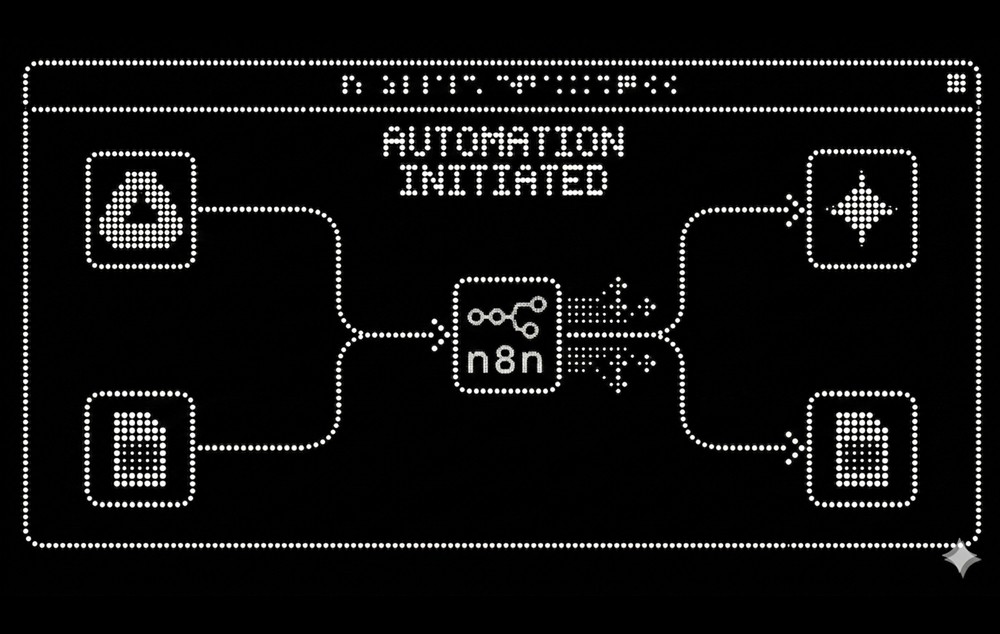
The manager makes the list of creatives he wants to analyze in Google Sheets
He clicks a button to start a run.
The workflow pulls a batch of ad creatives from the Meta Ad Library.
Gemini reads each image or video and writes a structured text description.
The descriptions appear in the same spreadsheet
The analyst reviews, refines, and uses the output for further analysis.
The analyst's role shifts from gathering to interpreting — the part of the work that needs human judgment.
Result: During active research cycles, the workflow saves around 10 hours of manual work — and produces more consistent data than reviewed by hand.
n8n
Gemini API
Claude Code
Google Apps Script
Meta Ad Library
Apify